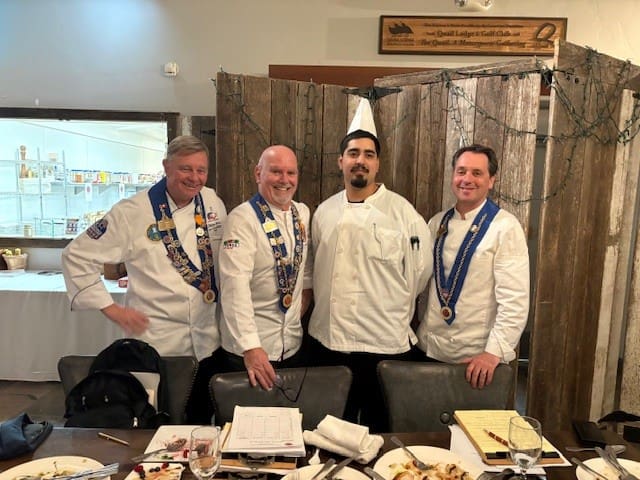
There is a moment—he will tell you this himself, though not in so many words—when everything rearranges. It happens not in the kitchen, not exactly, but somewhere between the work and the recognition of it. When Drummond Culinary Academy alumnus Nico Hernandez was announced as the first-place winner of the Jeunes Chefs Rôtisseurs Nationals competition—a significant opportunity for young chefs to showcase their abilities—at Rancho Cielo, he broke down in tears.
“I just saw how much I had grown, and everyone was proud of me for what I did,” Hernandez says during his break at the Peninsula Café at Monterey Peninsula College’s Student Center. “It was something so different from when I worked at Taylor Farms and Tesla. You don’t get a pat on the back for doing something good. After being at Rancho with all of the teachers, Chef EJ [Jimenez] and Chef Efren [Diaz], who gave me the confidence to put the food out that I do and the confidence to know it’s going to be good, it makes me feel even better when I see someone take their first bite, and I can see their enjoyment.”
It is the kind of statement that sounds simple, declarative, almost obvious—until you consider the absence it implies. The idea that pride must be learned somewhere, that it does not arrive pre-plated. That, like a sauce, it reduces over time.
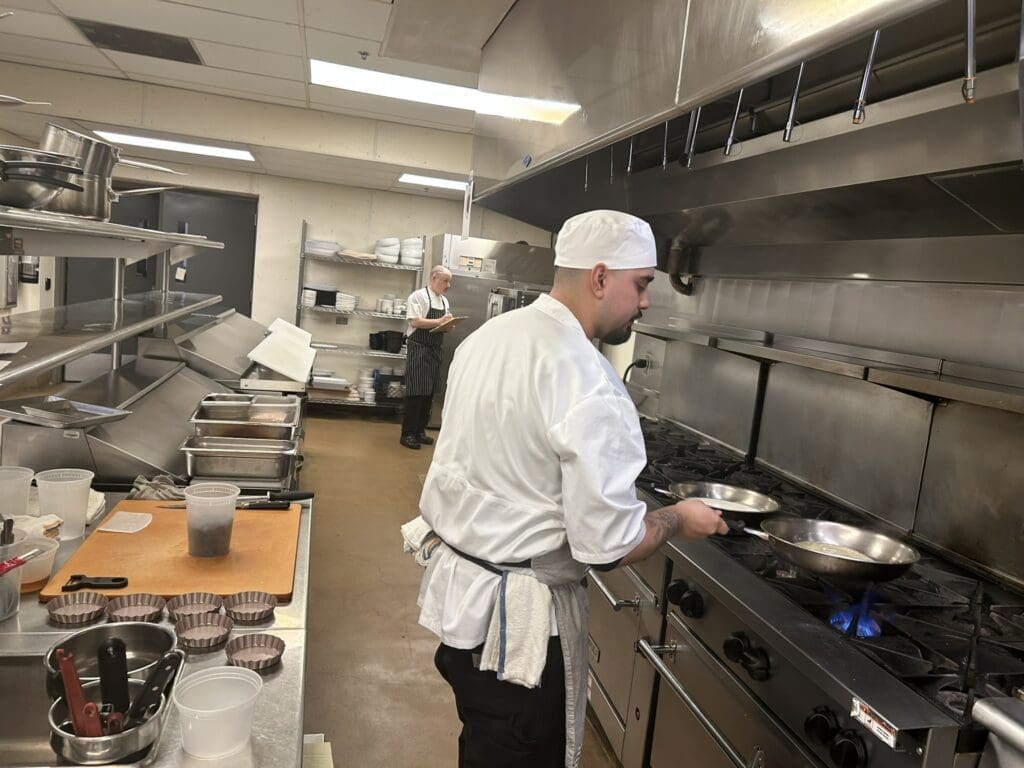
To secure that first win, Hernandez moved through the rules the way young chefs do when they begin to understand that constraints are not limitations but structure. Three hours. Three courses. Thirty minutes at the start to study a mystery basket, to map out intention against uncertainty. Mise en place written out, each item accounted for before a single flame is lit. A secret ingredient—assigned, immovable—threaded into the main dish. At least half the basket used, whether it made sense at first glance or not.
The competition itself, organized by Chaîne des Rôtisseurs, exists in that rarefied space where tradition and pressure meet: more than 75 countries, all of them insisting, in their own way, on precision, on taste, on the quiet rituals that define fine dining. It is less about winning than about proving you understand the rules well enough to bend them without breaking.
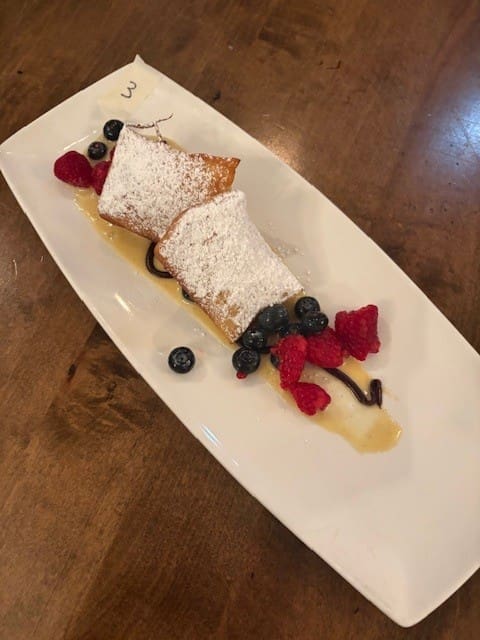
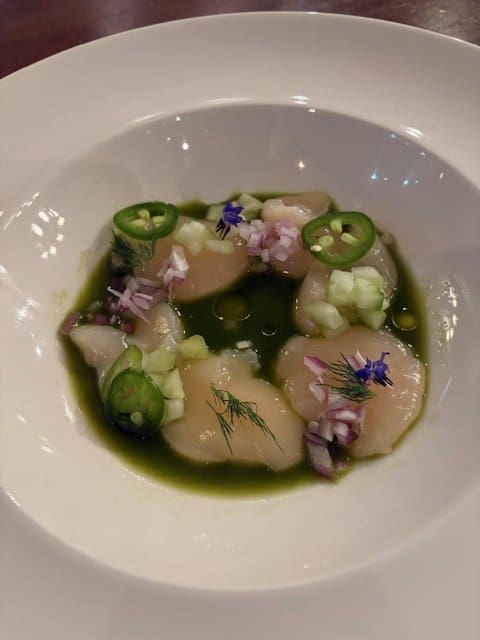
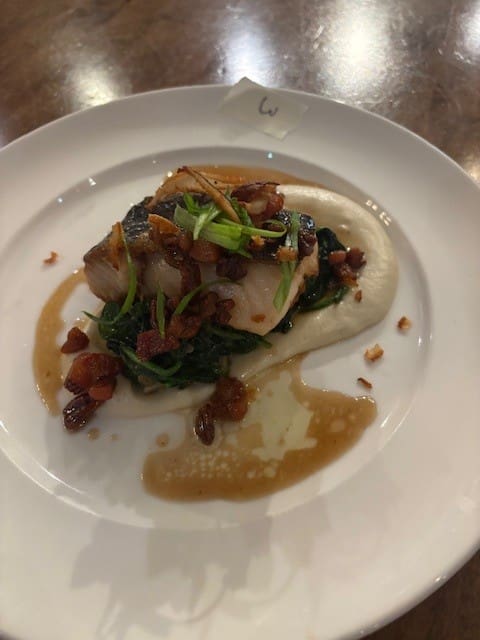
Hernandez’s assigned ingredient was bacon. He folded it into a sunchoke purée and a bacon-and-pecan praline sauce for a seared sablefish entrée—spinach, mushroom chips, a plate composed with the kind of intention that suggests both study and instinct. Before that came a sea scallop aguachile, sharp and immediate. After, a beignet with Earl Grey crème anglaise, chocolate ganache, macerated berries—an ambitious choice made more so by the fact that he had never made one before.
Even this feels instructive. The willingness to attempt what you have not yet mastered. The quiet understanding that failure, if it comes, will at least be yours.
Judging extended beyond the plate. Sanitation. Organization. Spelling on the menu—errors noted, points deducted. Technique observed in real time by judges who watch not just what you make but how you move while making it. Hernandez performed well in every category, though the more telling detail is how recently that would not have been the case.
Last year, only four months into his time at Rancho Cielo, he competed and faltered—stuffed bell pepper, steak with asparagus, chocolate mousse. Dishes that read now like placeholders, like someone still learning the language.
“Everything I did was basic,” Hernandez admits. “From the rest of the time I was in culinary school to my graduation, then to the next competition, my growth was huge.”
Growth is one of those words that gets used too often, usually without evidence. Here, it appears measurable. Observable. Almost visible in the food itself.

DCA General Manager Wanda Straw puts it more plainly: “Nico cooks from the heart. I respect him so much because he trusts his instincts, and he’s always observant. He’s been so focused for the last year.”
His only mistake this time—small, almost incidental—was leaving his knife bag on the table instead of storing it beneath, where it would have freed space. The kind of error that matters only because everything else did not. Hernandez reframes it the way people do when they have begun to understand process over outcome: He might not have learned the correction otherwise, not in time for what came next. Seattle.
For Hernandez, the trip to the Northwestern Division Finals at the Seattle Culinary Academy on March 7 was not just escalation but exposure—to scale, to unfamiliarity, to the subtle disorientation of being somewhere where everyone else already knows where the pans are kept. He had only flown once before. He had never been to Seattle.
“I learned that I would be competing against three students from their own school in Seattle, who had worked in that kitchen before,” Hernandez explains. “I had no clue where anything was, so I visited the kitchen the day before and took pictures and went back to my hotel room and watched videos to see where all the pots, plates and pans were. The kitchen was huge—like three Pebble Beach kitchens all in one. But it was amazing to see another type of kitchen and another group of kids who wanted to be there, learning and going into something they’re passionate about.”
There is something distinctly journalistic in this—the idea of studying a place before inhabiting it, of trying to impose order on the unknown through observation, through documentation, through ritual.
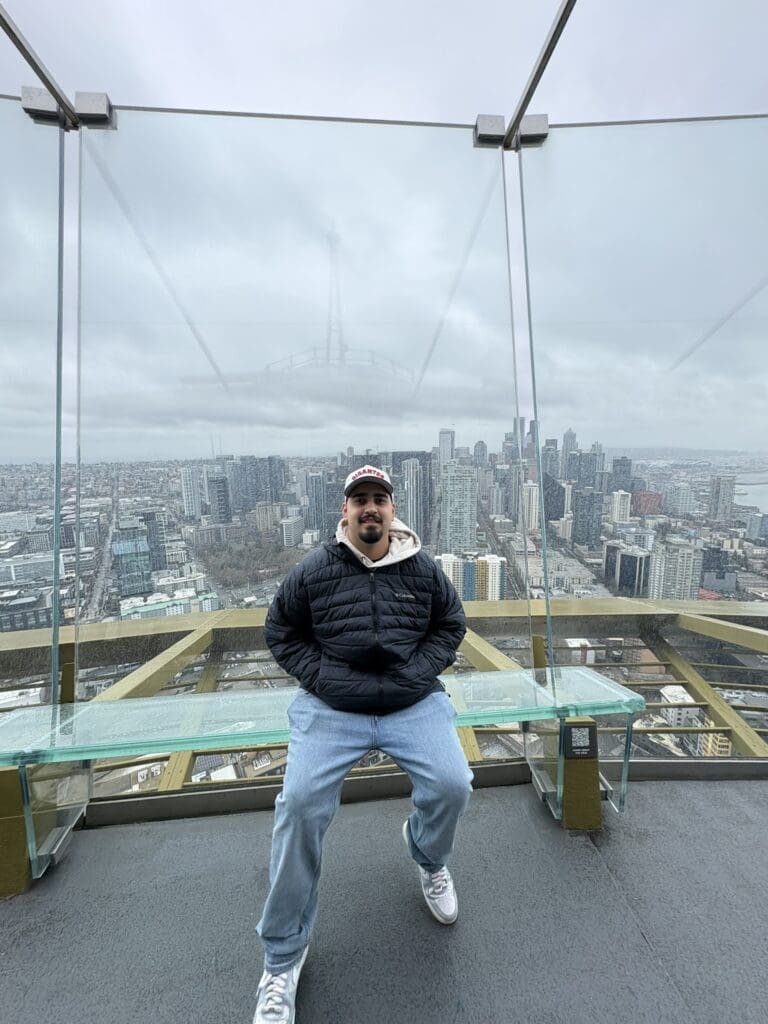
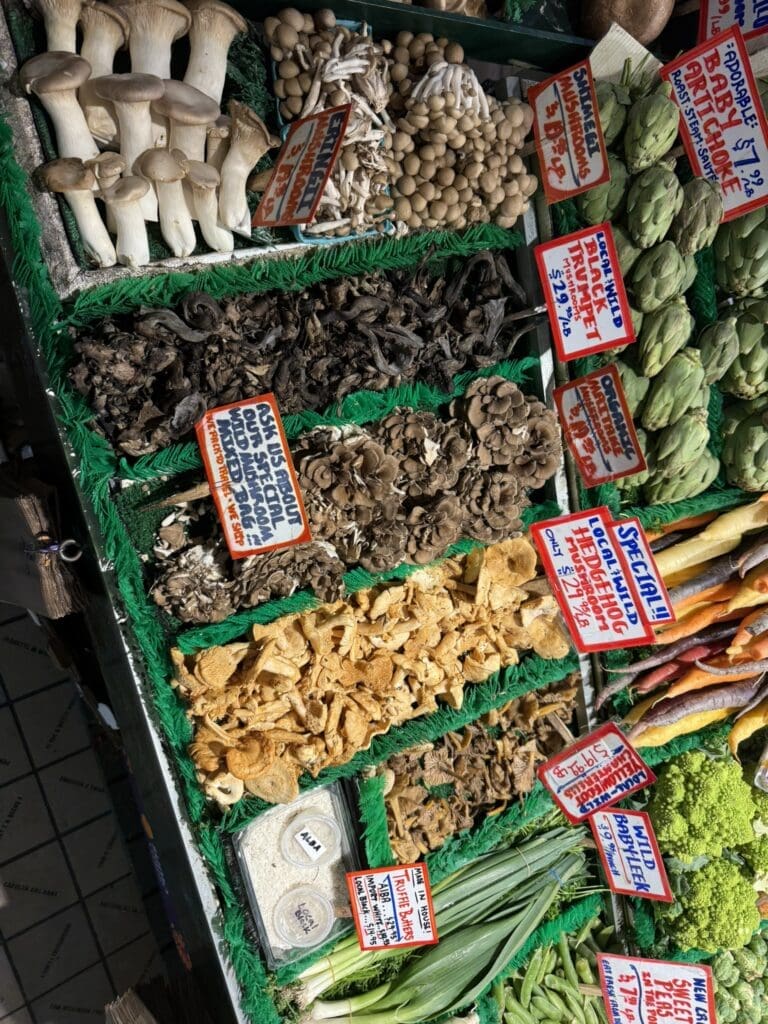
Before the competition, he allowed himself the city. Pike Place Market, where fish are thrown through the air as if gravity were negotiable. Salmon in variations—jerky, cold-cured, candied—each one a different interpretation of the same base note. The Space Needle, 600 feet above ground, its glass floor offering the kind of vertigo that becomes memory almost immediately.
The next morning, at 7am, the work resumed. A black box. New ingredients. A menu constructed under pressure. Three and a half hours to produce a meal for four.
“I felt like the outcast because it was their home field,” Hernandez says. “They knew this kitchen and where everything was and had everything you can think of, like a blast chiller, which I used to make a granita.”
Still, he moved forward the only way he knows how: by cooking. Citrus-iced crudo, ginger carrot coulis, tiger prawn in tiger de leche, orange sherry granita, wasabi parsley oil. Then a seared hanger steak—kabocha purée, Brussels sprouts, bacon-praline glaze, arugula. Dessert followed, as it always must: a dark chocolate and ginger ganache tart with a graham cracker crust, blueberries in orange liqueur and raspberry balsamic glaze.
“[Mentors] EJ and Efren always tell me, ‘You’ll never know if your food’s good unless someone critiques it,’” Hernandez explains. “So, I just stuck with making comfort flavors for myself.”
This is, perhaps, the clearest articulation of his philosophy: not confidence exactly, but a willingness to be seen. To be evaluated. To accept that judgment is part of the process, not separate from it.
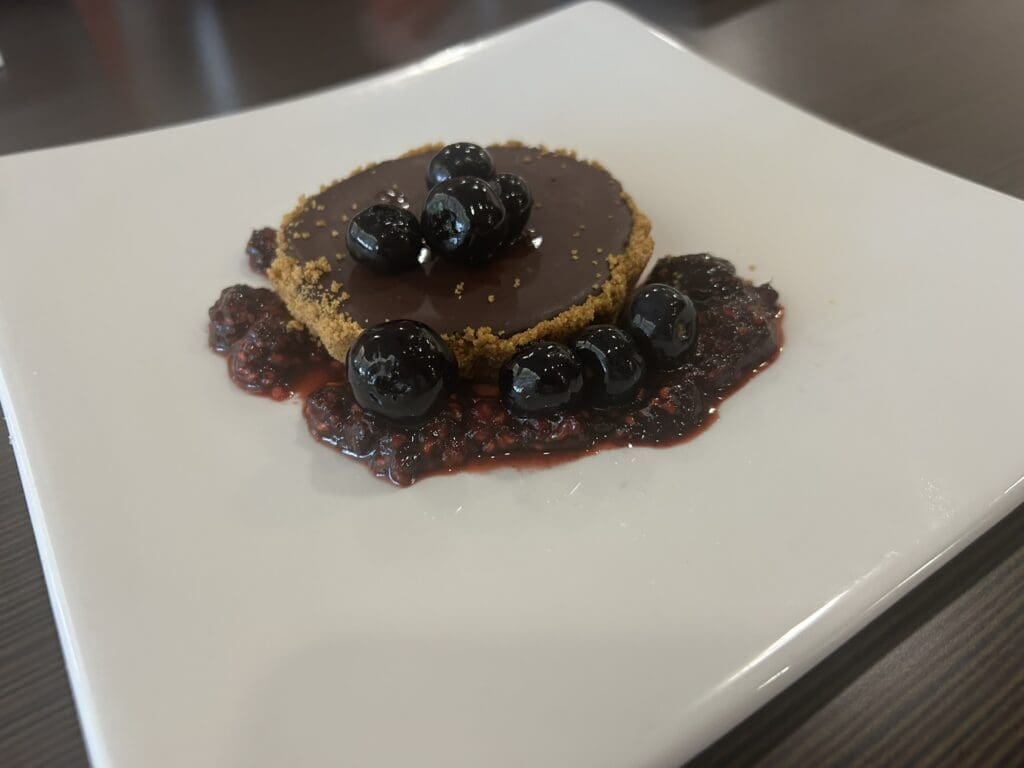
He placed third, which, depending on how you choose to interpret it, is either a loss or a confirmation. New city, new kitchen, experienced competitors—one of them a previous winner. Context matters. It always does.
There is, in Hernandez now, a sense of direction that feels less like ambition and more like clarity. He knows what he wants. More importantly, he knows what he doesn’t want—a distinction that tends to arrive later, if it arrives at all.
After graduating in Spring 2025, he took an internship at Bernardus in Carmel Valley. The name carries weight. The experience, for him, did not. Growth, again, became the metric. He found more of it elsewhere—at Monterey Peninsula College, working alongside Chef Efren Diaz, moving between roles that extend beyond the line: catering events like the Monterey Jazz Festival and the Salinas Air Show, building a broader understanding of the kitchen as both system and organism.
“It gives me more flexibility to work around everything,” Hernandez explains. “I’m not just on the line. I’m doing grab and gos. I’m creating the specials. I’m placing [vendor] orders. I’m putting away the orders when they get here. I’m learning how to cost out orders and everything else from being in the kitchen. Also, it gives me opportunities to be a mentor for everyone else in the kitchen.”
Mentorship—the final turn in the narrative, the point at which the story begins to repeat itself, but differently.
He is already planning to return to Seattle next year. This time, not as an outsider, not entirely. He believes he can win. Straw believes it, too.
“There’s a clarity he didn’t have before,” she says. “Something just clicked. It’s like watching a sensei in the kitchen.”
And maybe that’s what this is really about. Not the competition, not even the food, but the moment when something internal evolves into something visible. When the work and the person doing it become, briefly, the same thing.